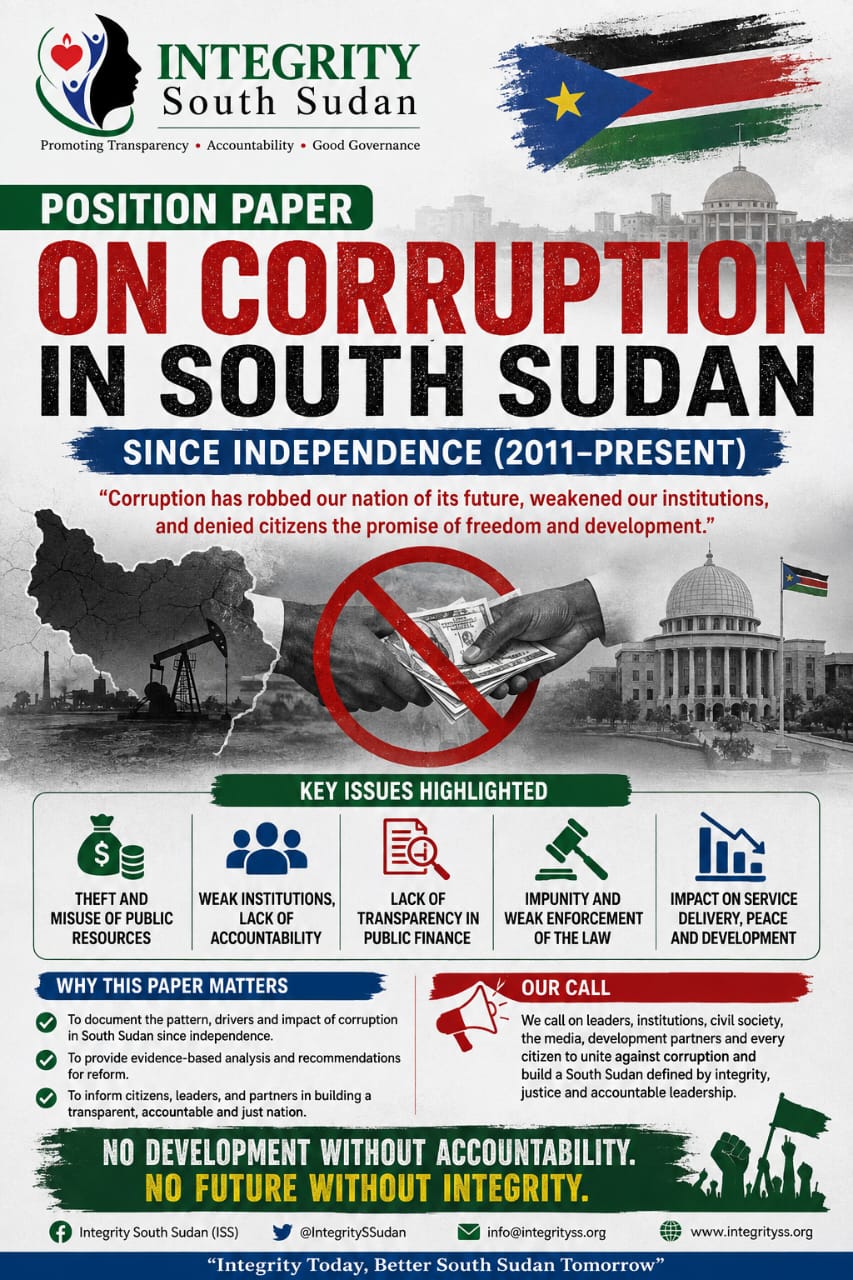
On July 9, 2011, South Sudan celebrated its independence after enduring decades of conflict, marginalization, and struggle. This newfound freedom presented a chance to establish a peaceful, democratic, accountable, and citizen-focused state. Unfortunately, corruption and ineffective governance have continued to thwart these ambitions. Since independence, numerous allegations and reports of misappropriation of public funds, inadequate financial controls, nepotism, bribery, procurement irregularities, and the misuse of public authority have raised alarming questions about how the country’s resources are managed. These issues have led to poor public service delivery, weakened institutions, increased poverty, insecurity, and a decline in public trust. Integrity South Sudan asserts that corruption should not merely be viewed as a financial issue; it is fundamentally a matter of governance, development, peace, and accountability. Tackling corruption, therefore, demands political will, strong institutions, engaged citizens, independent oversight, and effective law enforcement.
Position Paper on Corruption in South Sudan since Independence
27 Aug 2026